Zaika
Indian food delivery with live order tracking and a real-time restaurant admin panel.
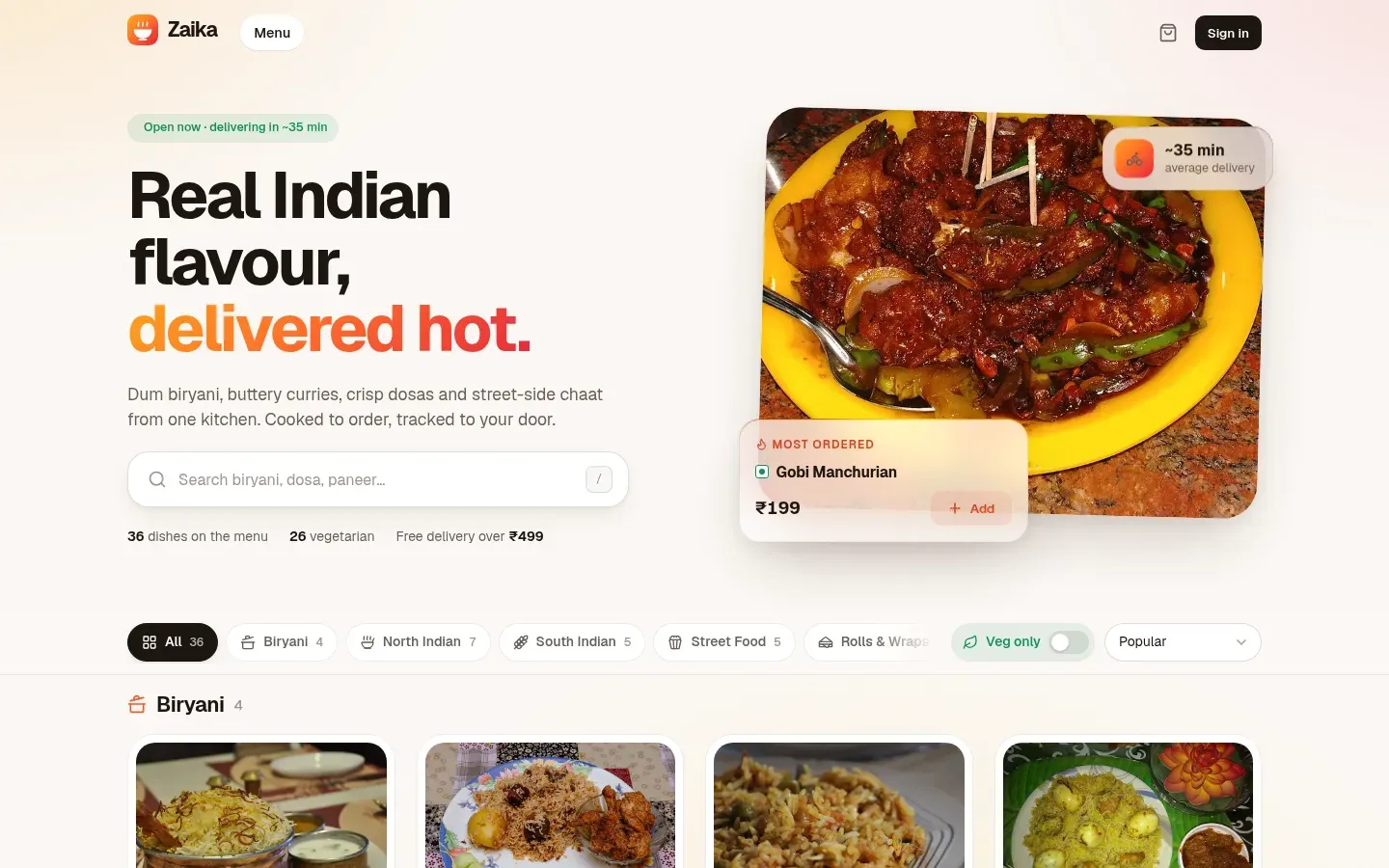
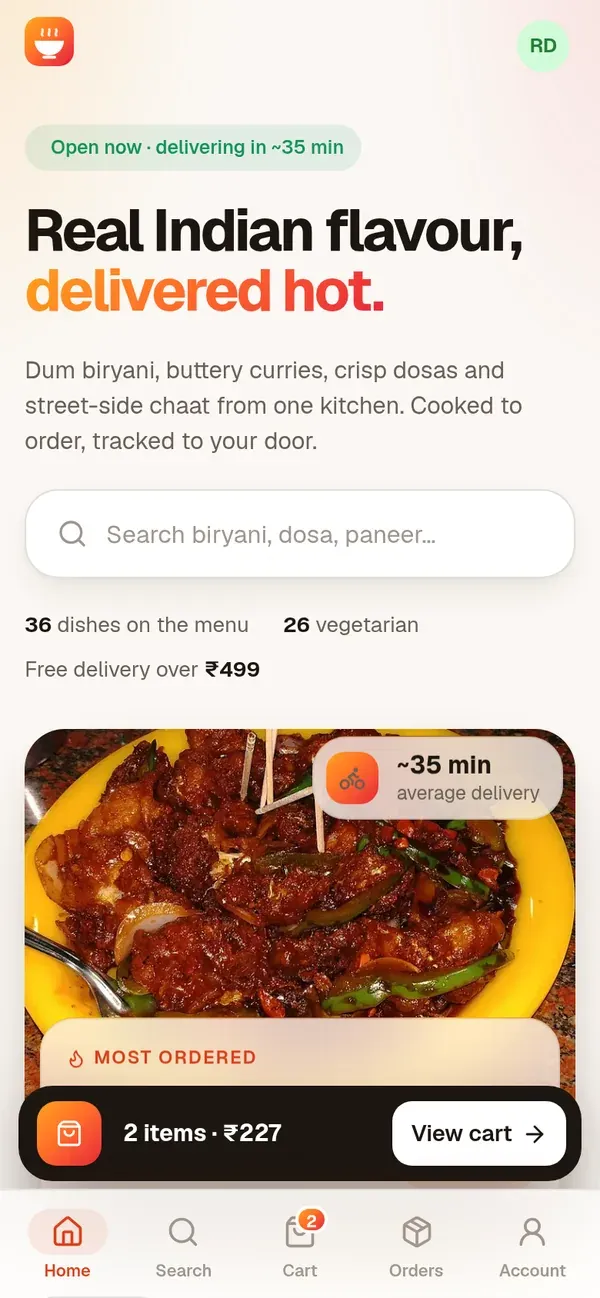
- Indian dishes in the demo menu
- 36Indian dishes in the demo menu
- command runs storefront, admin and API
- 1command runs storefront, admin and API
- payment options: UPI, cards, cash
- 3payment options: UPI, cards, cash
A light, modern storefront where customers customise dishes and follow their rider on a live map, plus a restaurant console with a real-time Kanban kitchen board, all running on one Express API and Neon Postgres.
OriginZaika started from a MERN food-delivery tutorial project, was rebuilt as 2.0 and extended in 2.1.
Reading the original code, I found that anyone could delete dishes, change any order, send their own prices, and mark an order paid by adding a flag to the URL. A food app that a curious customer can break isn't a portfolio piece. I rebuilt it so the server owns every rupee.
- Q1
Which numbers must only ever be computed on the server?
- Q2
How does the kitchen hear about a new order instantly?
- Q3
How do I show a live delivery map without a paid map API?
- Q4
How can visitors explore the admin panel without being able to break it?
- StructureBeforeSeparate customer site, admin site and APIAfterOne React 19 + Express 5 project, one port; on Vercel a static site plus one function
- DatabaseBeforeMongoDBAfterNeon Postgres with versioned SQL migrations
- RestaurantBeforeA list of ordersAfterDashboard with KPIs, Kanban kitchen board with chimes, menu, customers and settings
- SecurityBeforeAnyone could add or delete dishes and change any order; prices trusted from the browser; orders marked paid from a URL flagAfterRole checks, server-computed totals, verified payments, read-only demo admin
Prices and totals only on the server
The browser sends dish ids and options; the server computes every price, add-on and delivery fee.
A read-only demo admin role
Portfolio visitors can open the whole restaurant console, but every write returns 403.
Postgres with migrations
Orders, statuses and timestamps are relational, and versioned migrations make the schema reproducible.
An illustrated delivery map
No map API or key: the rider moves from kitchen to door with an ETA, and the kitchen sees a mini map in the order drawer.
- Menu by category with search, veg-only switch and sorting
- Veg / non-veg marks and Bestseller badges from real orders
- Customise portion, spice and add-ons with a live total
- Guest cart merged on sign-in; Razorpay (UPI, cards), cash or Stripe
- Live order tracking and delivery map
- Dashboard with KPIs and charts
- Kanban kitchen board with chimes for new orders
- Menu manager and dish editor
- Customers and store settings
Passwords hashed with bcrypt; the user's role is re-read from the database on every request.
Order totals and delivery fees are computed only on the server.
Static site plus one serverless function on Vercel.
36 Indian dishes with credited photos and a read-only demo admin.
Dish customisation that survives the whole journey: half or full, spice level and paid add-ons must appear in the cart, checkout, order page and kitchen ticket, and come back on reorder, while prices stay server-side.
Security bugs are product bugs. Fixing them changed the design: roles, a demo admin and server-side totals made the whole app simpler to reason about.