Vendora
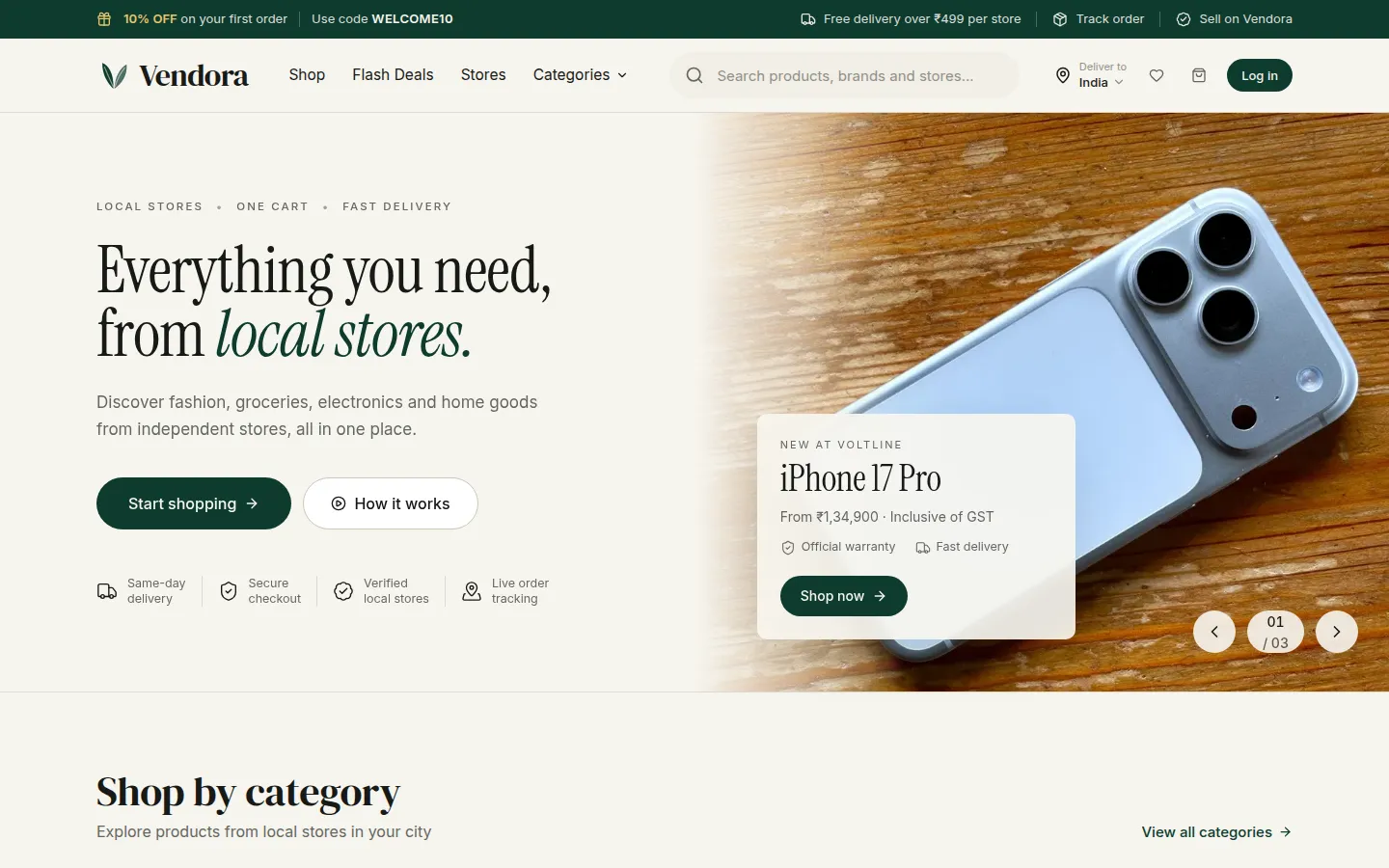
A multi-vendor marketplace for India: one cart across independent stores, flash deals and live delivery tracking.
- course stores merged into one product
- 5 → 1course stores merged into one product
- roles: shopper, seller, rider, admin
- 4roles: shopper, seller, rider, admin
- Indian pricing, PIN lookup, all states
- ₹Indian pricing, PIN lookup, all states
Shoppers check out across many independent stores in a single cart and follow their rider live on a map. Sellers run their own storefronts with an AI listing assistant and flash deals; admins approve stores. Everything is priced in rupees.
OriginVendora merges five separate course e-commerce projects (GoCart, Forever, Grocery Delivery, Greencart, QuickCart) into one product, rebuilt from the ground up.
I had five e-commerce course projects that each did one thing: one had multi-vendor stores, one had size variants, one had riders on a map. None of them was a product. I wanted to see what happens when you merge them into one real marketplace and fix everything the demos skipped.
- Q1
How does one cart work when every item comes from a different store with its own delivery fee?
- Q2
What has to happen on the server so the browser can never set a price or oversell stock?
- Q3
What does “built for India” actually mean in the address form and the prices?
- ScopeBeforeFive separate demo storesAfterOne marketplace: fashion, groceries, electronics and home goods from independent sellers
- DataBeforeThree different MongoDB setupsAfterNeon Postgres + Prisma, one schema
- AuthBeforeClerk in one app, hand-rolled JWTs in othersAfterBetter Auth, self-hosted, roles stored in the database
- CheckoutBeforePrices trusted from the browserAfterServer-side price, size and stock checks; stock reserved in a transaction; Stripe payments verified before an order counts as paid
- DesignBeforeFive unrelated templatesAfterEditorial design system: ivory and forest green, Instrument Serif headlines, optional dark theme
Next.js 16 with Server Actions
One app for shoppers, sellers, riders and admins. Server Components keep catalogue pages fast; Server Actions keep mutations next to the data.
Postgres + Prisma instead of three MongoDBs
Orders, stock, coupons and stores are relational. Reserving stock inside a transaction is the only honest way to avoid overselling.
Better Auth, self-hosted
No third-party account needed, and roles live in the same database as everything else.
Built for India from the start
Rupees with Indian digit grouping (₹1,34,900), all states and union territories, and PIN code lookup that fills city and state.
- Search across products, brands, tags and stores; filters and sorting live in the URL
- Product pages with gallery, size picker, reviews and related items
- Flash deals with live countdowns
- One cart grouped by seller, coupons, guest cart merged on login
- Live order tracking on OpenStreetMap, refreshed every 5 seconds
- Seller storefront and dashboard with an AI listing assistant
- Inventory with history
- Rider screen with delivery OTP
- Admin approval of stores
Server-side price, size and stock checks, stock reserved in a transaction, per-store orders and delivery fees, coupon expiry enforced.
Cash on delivery or Stripe; Stripe payments are verified with Stripe before orders count as paid.
Leaflet + react-leaflet with OpenStreetMap tiles, so tracking works with no paid map API.
Loading skeletons, empty states, toasts and keyboard-friendly controls on every screen, 390 px phones to wide desktops.
Checkout across stores: one cart becomes several per-store orders, each with its own delivery fee, coupon rules and stock reservation, and all of it must fail or succeed together.
Merging features is easy; merging data models is the real work. Once the schema was right, every screen got simpler.