Restro OS
Ordering, billing, reservations, and delivery-platform orders unified in one restaurant system.
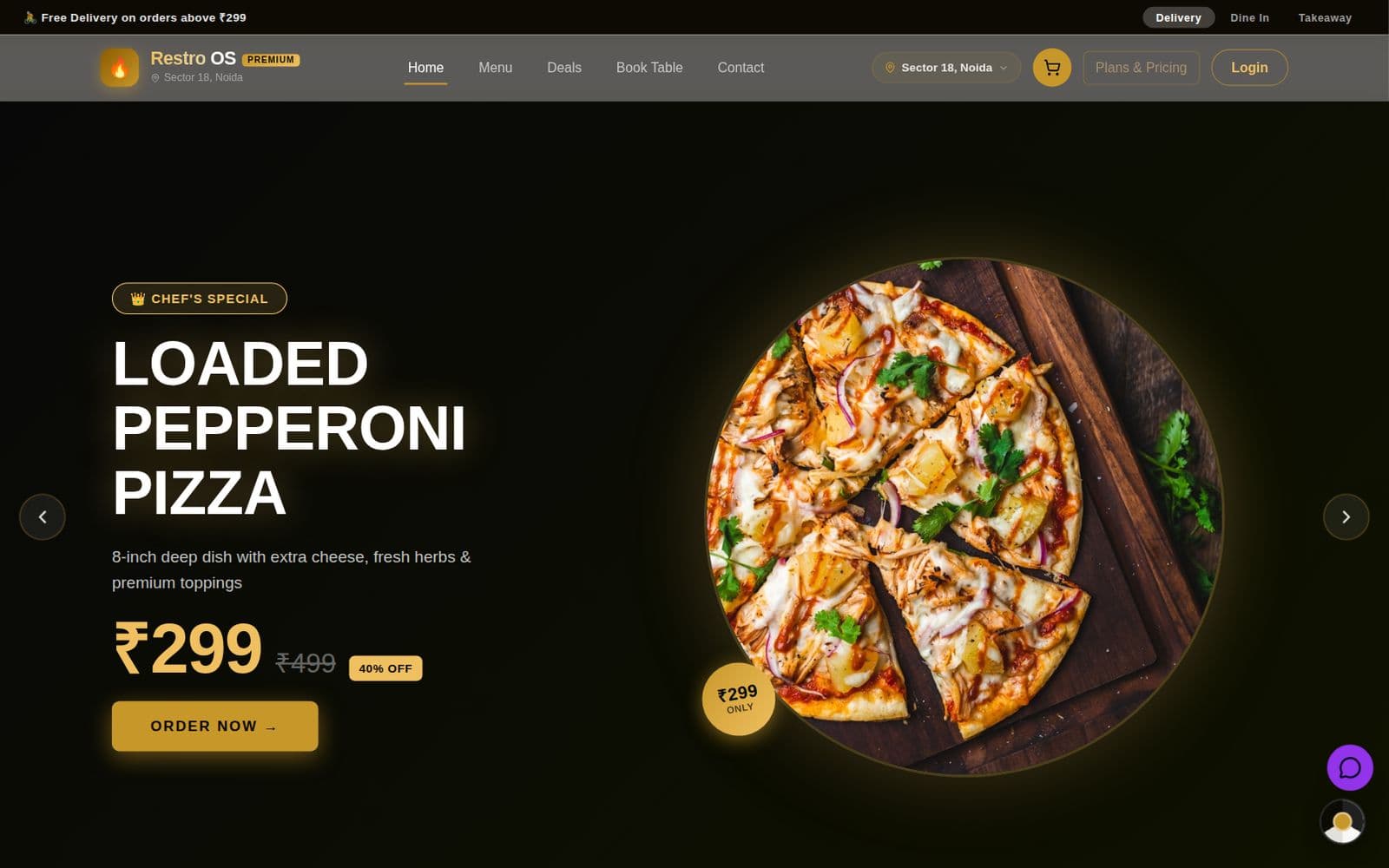
Bookings, billing, and delivery orders lived in separate tools, so reconciling a day's numbers was manual and dish-level margins stayed invisible.
Restaurants were juggling one tool for billing, another for reservations, and separate dashboards for Zomato and Swiggy orders. Closing the day meant reconciling them by hand — and nobody could see which dishes actually made money.
- Q1
Can dine-in, takeaway and delivery run through one order system?
- Q2
How do we end double-booked tables?
- Q3
Which numbers does an owner really need to see?
Dine-in, takeaway, and delivery run from one platform with automated billing and booking, feeding an analytics layer on what actually drives revenue.
One order system for every channel
Dine-in, takeaway and Zomato and Swiggy orders all land in the same place.
Automated billing and reservations
GST-ready billing and table bookings run on their own, with no double-bookings.
Analytics by dish and by hour
Revenue is broken down to what sells and when, so owners see what actually drives the business.
- 01Dine-in · takeaway · delivery
- 02One order system
- 03Billing
- 04Revenue analytics
Rush hour. A restaurant system has to stay fast and simple when the floor is full and orders arrive from every channel at once.
Unifying the data is the real feature — once every order lives in one place, the insight comes almost for free.